
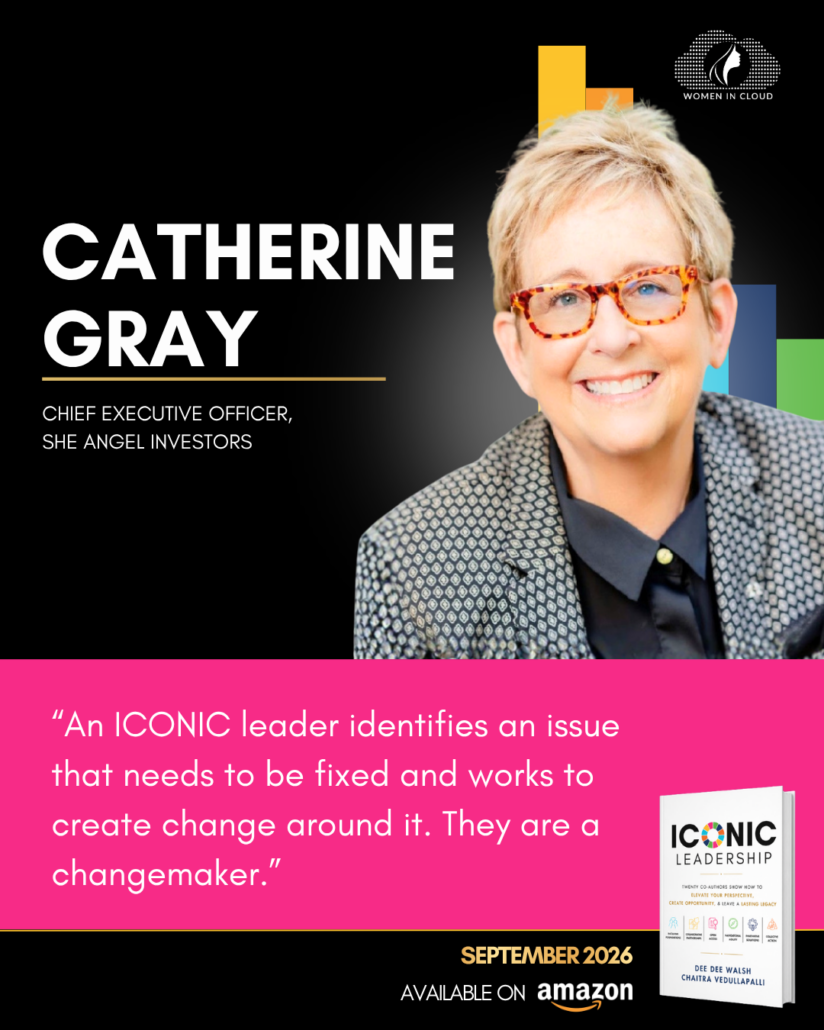
Catherine Gray: Changing Who Gets to Fund the Future

Some systems remain unequal because too few people can see how they work.

The barriers are embedded in relationships, networks, assumptions, and decisions made behind closed doors. For those standing outside the system, the outcome can feel personal. But the problem is often structural.

Catherine Gray has built her leadership around making those structures visible and using storytelling to create change.

Growing up in Virginia during school desegregation, Catherine witnessed inequality at a formative time in her life. She also grew up during a period when women were only beginning to gain rights and freedoms that younger generations might now take for granted. As an LGBTQ woman who could not initially live openly in every part of her life, she developed a deep conviction that rights, visibility, and opportunity should not depend on identity.

That conviction became action through media.

After coming out to her family, Catherine helped launch a gay cable network and produced I Can’t Marry You, a documentary about the rights and protections denied to same-sex couples. When people told her marriage equality would never happen, she continued. She raised the funding, secured Betty DeGeneres as narrator, found sponsors, and brought the film to public television.

The experience reinforced something Catherine had already begun to understand: film and television can help people see lives, challenges, and possibilities that were previously hidden from them.

Years later, she turned that same lens toward another inequitable system.

Catherine saw that women entrepreneurs were building companies, solving problems, and creating innovations, yet were receiving only a small fraction of available venture capital. She also recognized that many women had never been introduced to angel investing or venture capital as a path for building wealth and influencing which ideas reach the marketplace.

Her response was to build platforms that could change both sides of the equation.

Through She Angel Investors, Catherine connects women with resources to grow their businesses, build wealth, understand investment, and develop the relationships that make funding possible. Through her Invest in Her podcast, she has created space for accomplished entrepreneurs and investors to share their experiences and resources with others.

Her film Show Her the Money carries that mission to a wider audience.

Catherine raised more than one million dollars for the film by bringing together over 30 women and several men who believed in its purpose. The project went on a 100-city tour, reached audiences through hundreds of screenings, and became part of a broader effort to educate people about the funding gap and the role women can play as investors, founders, and decision-makers.

This work reflects the ICONIC Leadership pillar of Open Access.

Catherine is not only asking why women receive less funding. She is helping more women understand how capital moves, where investor relationships are formed, and how they can enter the system themselves. Her belief is that women must be present not only as entrepreneurs asking for capital, but also at the tables deciding where that capital goes.

For Catherine, fundraising begins with relationships. Entrepreneurs must show up, know their businesses, communicate their passion, and build trust with people who believe in their vision. But she also knows that the system itself must become more representative. Investors often support people and ideas they recognize, which is why diverse decision-makers are essential to a more equitable funding landscape.

Her chapter offers a view of leadership that combines purpose with visibility and conviction with action.

Catherine does not wait for an inequity to correct itself. She gathers people, creates a platform, finds the resources, and moves the issue into public view.

Because a changemaker does more than recognize what is broken.

A changemaker helps others see it, then gives them a way to participate in building what comes next.

Learn More & Get Involved
✍️ ICONIC Leadership Assessment – https://womenincloud.com/iconicleadershipassessment/
▶️ ICONIC Leadership Podcast – https://open.spotify.com/show/6EizaFqN8adxa6WcWPJV0e?si=b442899535694682
📖 ICONIC Leadership Book – https://shop.ingramspark.com/b/084?params=owAAc4hbwh8riSosnpCgvnssQZ0ryWU9ZritStkw3F3
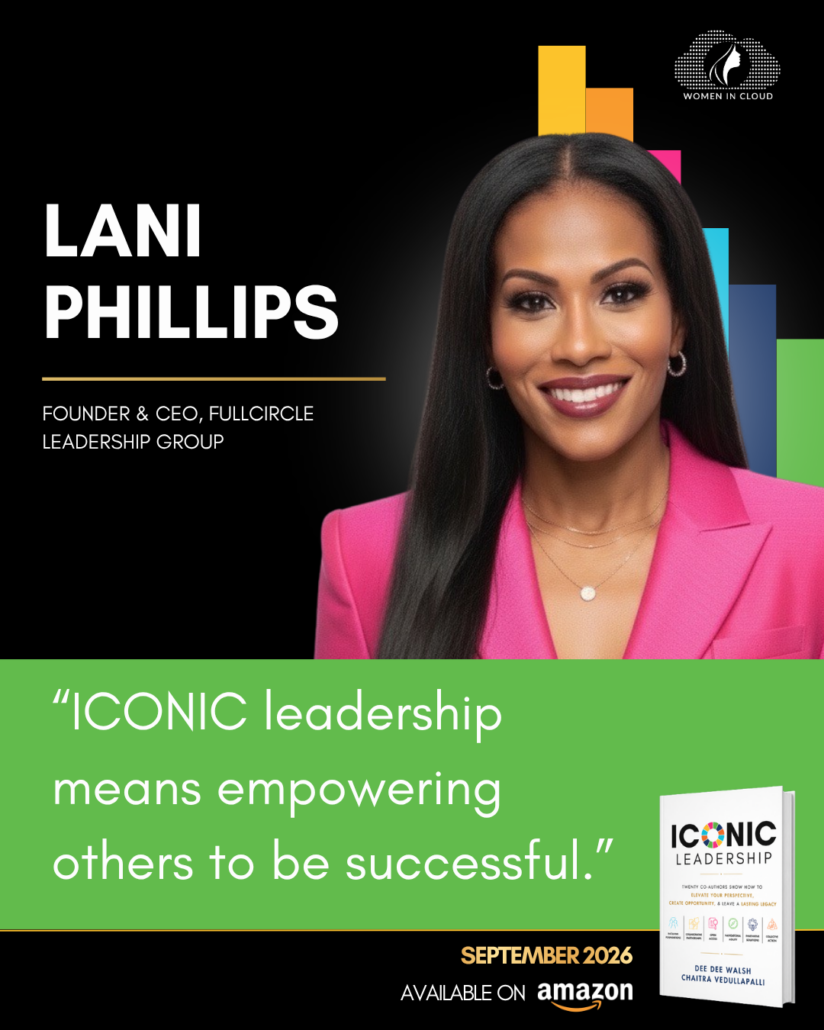
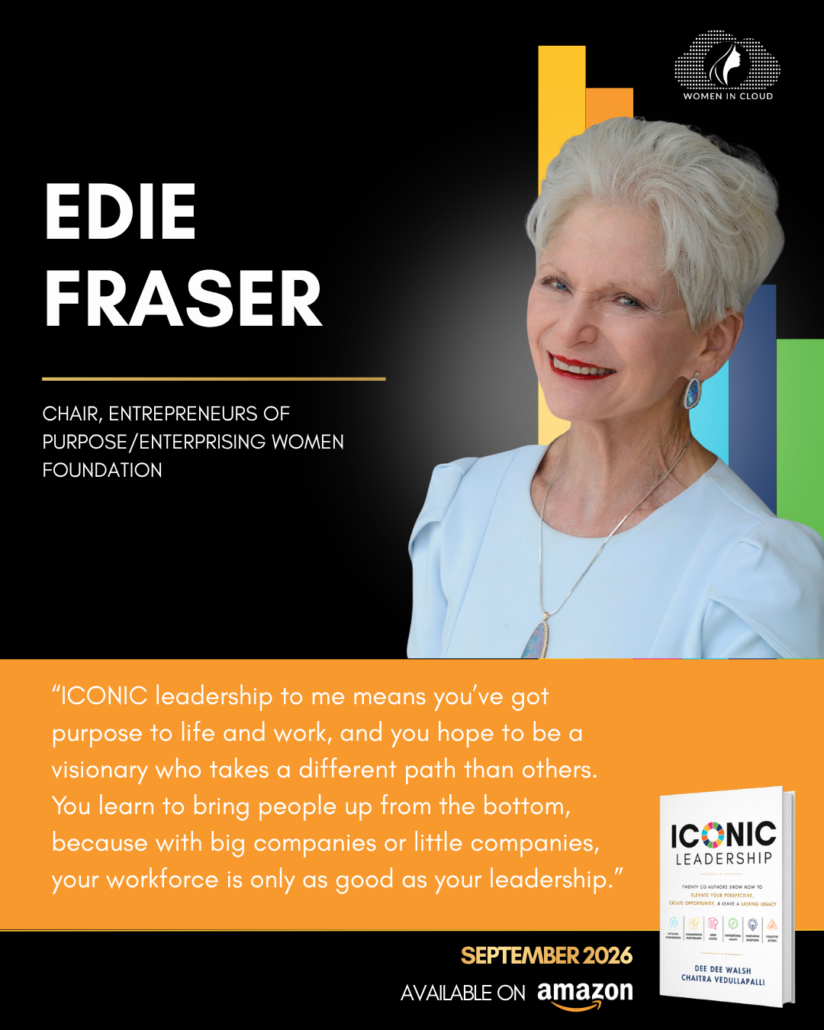
Sherlaender “Lani” Phillips: Empowering Others to Succeed

The strongest leaders do not make themselves indispensable.

They build people who no longer need them to have every answer.

For Sherlaender “Lani” Phillips, that understanding was learned through experience. Early in her leadership journey, she believed success came from working harder, delivering consistently, and becoming the person everyone could depend on. That approach had helped her establish credibility as an individual contributor.

But leadership required something different.

When Lani first began managing others, she tried to give people the same blueprint that had worked for her. She shared her formula and expected others to follow it. The problem was that people brought different strengths, motivations, experiences, and needs to the work.

Leadership could not remain centered on what she knew.

It had to become centered on what she could unlock in others.

That shift reflects lessons planted much earlier in Lani’s life. Her father helped her develop confidence, discipline, and the courage to use her voice. Her mother gave her curiosity and modeled the ability to make people feel seen and heard. Before her mother passed away, she also gave Lani a lasting charge: value education, learn to stand on your own, invest in meaningful relationships, and take care of the people entrusted to you.

Those lessons became part of how Lani leads.

She believes performance matters, but she refuses to separate performance from humanity. One of her clearest non-negotiables is preserving the dignity of people. She does not believe leaders must choose between caring for individuals and delivering results. The responsibility is to do both.

That commitment shaped her progression through technology, sales, and executive leadership. Across her career, she learned to meet people where they were, understand what they were trying to accomplish, and create the conditions that could help them grow.

Sometimes that required encouragement.

Sometimes it required access to rooms, conversations, and opportunities that had previously been unavailable.

Sometimes it required honest feedback, accountability, or removing barriers that were preventing someone from succeeding.

This is where Lani’s story connects naturally to Inclusive Foundations and Collaborative Partnerships within ICONIC Leadership.

Inclusive leadership begins by recognizing that people cannot be reduced to assumptions, titles, or performance data. Lani learned not to enter a relationship believing men would lead one way and women another. She approaches people with curiosity, listens for what is beneath the behavior, and works to understand the environment shaping their choices.

Her perspective on data reflects the same principle. Spreadsheets can reveal patterns, gaps, and outcomes, but they cannot explain the complete human reality behind them. Lani believes leaders must speak with the people doing the work, experience what is happening on the ground, and use discernment before making decisions.

That human advantage becomes even more important as artificial intelligence expands.

Lani sees AI as a powerful tool for generating options, identifying patterns, and extending human capability. But she does not believe it should replace thinking, judgment, dialogue, or trust. Leaders must remain curious enough to challenge its output and grounded enough to preserve the human connection technology cannot reproduce.

Her chapter invites leaders to reconsider what their teams truly need from them.

Do people depend on you for every answer, or have you developed their confidence to decide? Do your systems protect dignity while driving accountability? Are you using your influence to control outcomes, or to create shared ownership?

For Lani, leadership becomes iconic when success is no longer concentrated in one person.

It becomes iconic when others rise, lead, and succeed because someone first believed they could.

Learn More & Get Involved
✍️ ICONIC Leadership Assessment – https://womenincloud.com/iconicleadershipassessment/
▶️ ICONIC Leadership Podcast – https://open.spotify.com/show/6EizaFqN8adxa6WcWPJV0e?si=b442899535694682
📖 ICONIC Leadership Book – https://shop.ingramspark.com/b/084?params=owAAc4hbwh8riSosnpCgvnssQZ0ryWU9ZritStkw3F3
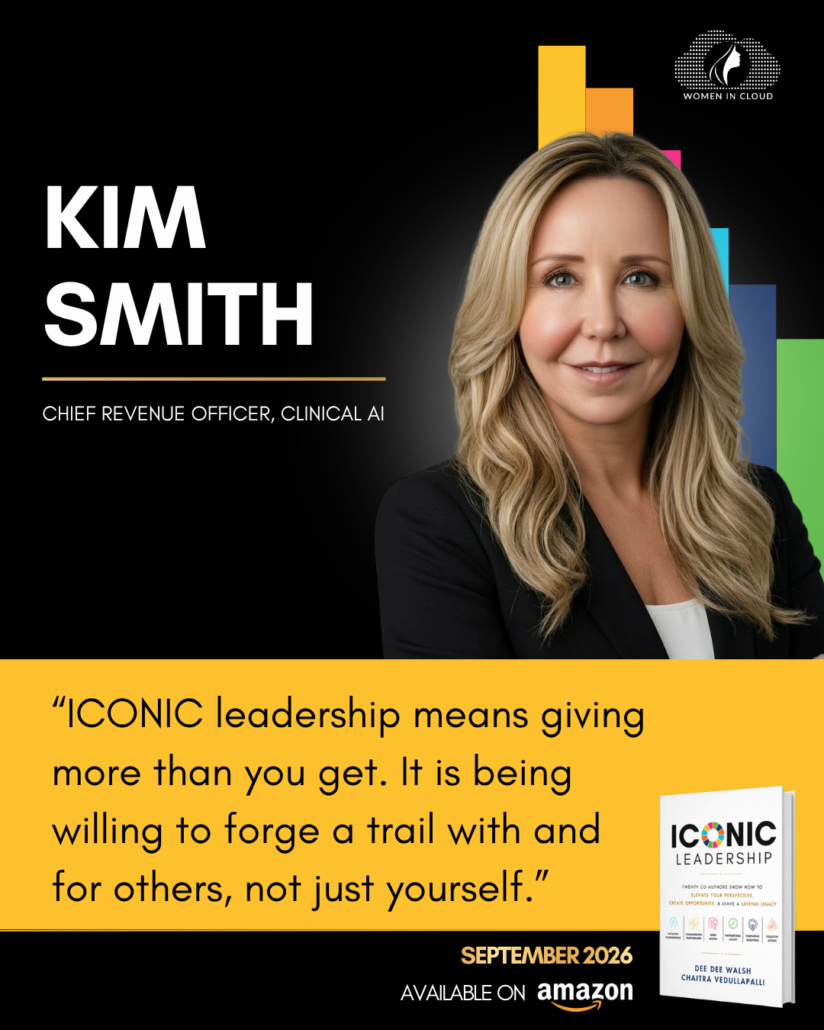
Edie Fraser: The Ripple Effect of Purpose-Driven Leadership

Some leaders are remembered for what they achieved. Others are remembered for the opportunities that continue because they were here.

For more than five decades, Edie Fraser has devoted her career to creating those opportunities. Through business, public service, mentorship, and philanthropy, she has built networks that help women lead, businesses grow, and communities prosper. Her work reminds us that the most enduring influence is rarely measured by personal accomplishment. It is measured by the people who continue to rise because someone chose to open a door.

For Edie, purpose is not an aspiration. It is a daily practice. It shapes how she builds relationships, how she develops leaders, and how she uses influence to create access for others. Leadership, she believes, cannot simply flow from the top down. It must create pathways that allow others to move forward.

That conviction has shaped every stage of her career. Whether founding organizations that advance women in business, championing mentorship through Million Women Mentors, or bringing together leaders across sectors through Women Business Collaborative and Entrepreneurs of Purpose, Edie has consistently focused on one idea: meaningful change is created collectively, not individually.

This is where her story connects so naturally to ICONIC Leadership. Her chapter embodies Collective Action and Collaborative Partnerships, demonstrating that influence grows when people unite around a shared purpose and invest in one another’s success. Rather than accumulating power, Edie has spent a lifetime multiplying it.

Readers will discover a leader who sees relationships as infrastructure. She challenges the traditional view of leadership as hierarchy, status, or personal visibility, offering a different measure of success: the opportunities created, the people elevated, and the systems that continue creating value long after the founder has stepped aside.

Her chapter is ultimately an invitation to think differently about legacy. Not as something we leave behind at the end of our careers, but as something we build every day through generosity, mentorship, and the intentional creation of opportunity.

Because for Edie Fraser, the true measure of leadership is not the path you carve for yourself. It is the pathways you leave open for everyone who follows.

Learn More & Get Involved
✍️ ICONIC Leadership Assessment – https://womenincloud.com/iconicleadershipassessment/
▶️ ICONIC Leadership Podcast – https://open.spotify.com/show/6EizaFqN8adxa6WcWPJV0e?si=b442899535694682
📖 ICONIC Leadership Book – https://shop.ingramspark.com/b/084?params=owAAc4hbwh8riSosnpCgvnssQZ0ryWU9ZritStkw3F3
Kim Smith: Forging the Trail for Others

Being first can open a door. Leadership determines what happens after it opens.

For Kim Smith, leadership has never been defined solely by reaching a destination before others. It is measured by what a leader gives, what becomes possible because they stepped forward, and whether the path is clearer for the people who follow.

Her understanding of this began long before she entered the technology industry.

As a teenager, Kim chose to try out for her school’s boys’ soccer team at a time when there was no equivalent team available to young women. She did not step onto the field to become a symbol. She stepped onto it because she wanted to play.

The experience taught her to work through resistance, adapt to circumstances that were not designed for her, and earn trust through contribution. It also introduced her to a leadership style that would shape her career: leading from behind.

Kim learned that the most important player is not always the person taking the final shot. Sometimes it is the person anticipating what will happen several moves ahead, creating the assist, or helping the team see options they could not see before.

That perspective became increasingly valuable as she moved into business and technology.

Across her career, Kim has worked in spaces defined by complexity, rapid change, and emerging possibilities. Her instinct has been to approach uncertainty with what she describes as insatiable curiosity. Rather than allowing unfamiliarity to become a barrier, she studies the field, considers the available choices, evaluates the risks, and moves forward with the information she has.

She does not expect every decision to be perfect.

For Kim, movement creates learning. New information creates an opportunity to adjust. Failure is not evidence that the path should never have been attempted. It is data that can inform the next decision.

This is where her leadership connects naturally to Navigational Agility and Open Access within ICONIC Leadership.

Kim’s story demonstrates that agility is not simply the ability to react quickly. It is the discipline to remain present while looking several moves ahead. It requires leaders to understand that circumstances will change, assumptions may need to be revised, and yesterday’s experience cannot automatically be imposed on tomorrow’s reality.

Her commitment to access is equally central.

Kim has seen how people can limit themselves not because they lack ability, but because they do not know a door exists or assume it was never intended for them. Her own journey showed others that a different option was possible. Her work in technology has continued that pattern by focusing on how innovation can become more useful, discoverable, inclusive, and capable of improving the human experience.

Yet her definition of iconic leadership goes beyond innovation.

It is about giving more than you receive. It is the willingness to prepare, take the calculated risk, and forge a trail without requiring a guaranteed reward. It is also the responsibility to clear away some of the obstacles so others can move through more quickly and build paths of their own.

Kim’s chapter invites readers to reconsider where leadership power truly lives. Is it in being the person at the front, or in expanding the number of people who can move forward?

Her answer is found in the assist, the open door, the shared option, and the trail that no longer belongs to one person.

Because iconic leadership does not end with being first.

It continues through everyone who discovers that they can go next.

Learn More & Get Involved
✍️ ICONIC Leadership Assessment – https://womenincloud.com/iconicleadershipassessment/
▶️ ICONIC Leadership Podcast – https://open.spotify.com/show/6EizaFqN8adxa6WcWPJV0e?si=b442899535694682
📖 ICONIC Leadership Book – https://shop.ingramspark.com/b/084?params=owAAc4hbwh8riSosnpCgvnssQZ0ryWU9ZritStkw3F3

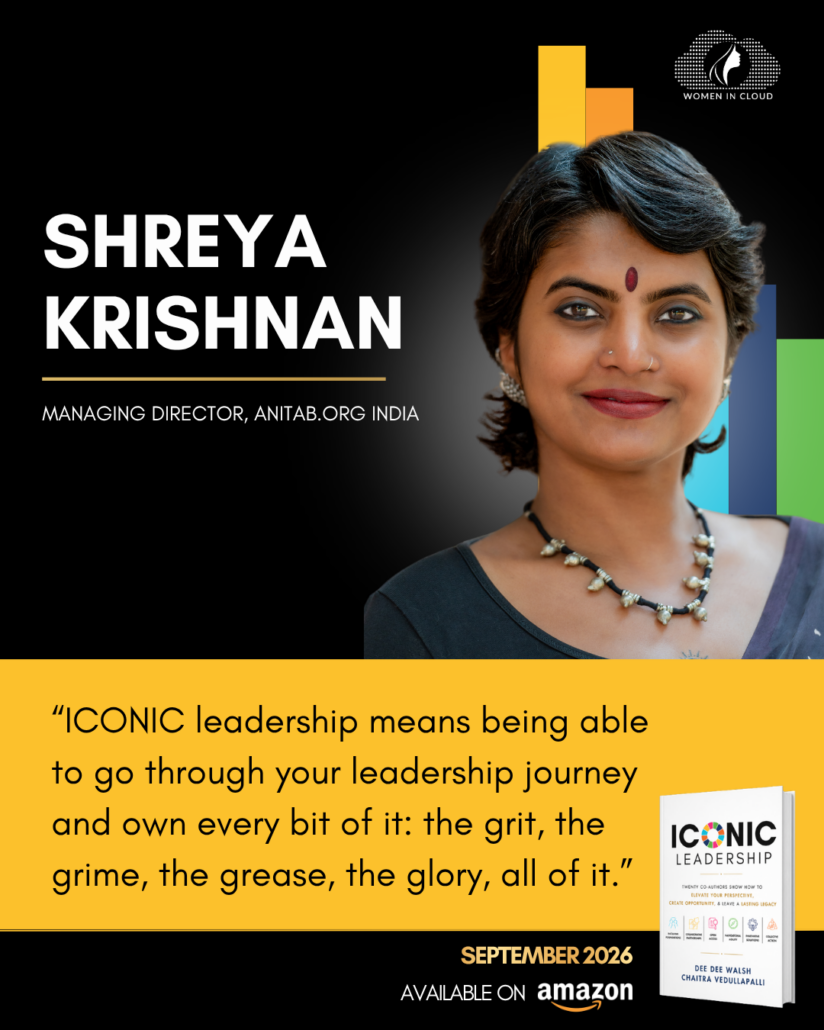
Shreya Krishnan: Owning the Grit and the Glory

Leadership is often presented through its most visible moments: the title earned, the challenge overcome, the decision that changed everything.

Shreya Krishnan offers a more complete view.

For her, leadership is not only found in the glory. It is also shaped through the grit, the grime, and the difficult work that happens long before an outcome becomes visible. To lead fully is to own every part of that journey without hiding the struggle, softening the truth, or separating success from what it required.

That perspective reflects the way Shreya has learned to show up: authentic, audacious, consistent, and honest. Her leadership story is not built around performing perfection. It is grounded in being seen as she is, acknowledging the complexity of the moment, and remaining accountable to the purpose she is there to serve.

Purpose, in Shreya’s world, is not simply a personal ambition. It begins with a deeper question: why am I the person in this moment facing what is happening, and what does that make me responsible for?

That question has shaped how she understands power and access.

Throughout her journey, Shreya has encountered spaces where age, gender, hierarchy, and inherited expectations influenced whose voice was heard and whose potential was recognized. Rather than learning only to navigate those systems, she began asking what needed to be challenged, dismantled, or rebuilt so that others would not face the same barriers in silence.

Her approach does not separate courage from care. She believes empathy can remain present even during difficult decisions, and that strength does not have to resemble hardness. Assertiveness, gentleness, rage, reflection, strategy, and compassion can all belong in the same leadership toolbox. The power lies in knowing what the moment requires and using it with awareness.

This is where Shreya’s story connects naturally to ICONIC Leadership.

Her work reflects Inclusive Foundations, because the future cannot be designed equitably when the people who will live in it are absent from the rooms where it is built. It also reflects Collective Action, because meaningful transformation requires more than one visible leader. It requires communities that build confidence, expand opportunity, bring overlooked voices forward, and celebrate success without treating another person’s progress as a threat.

For Shreya, leadership becomes more expansive when competition turns inward. Instead of measuring herself against the people around her, she focuses on becoming better than her previous best. That choice creates room to sponsor, mentor, champion, and support others without diminishing her own ambition.

Her chapter invites readers into the fuller reality of leadership: the internal shifts, difficult conversations, moments of resistance, and deeper alignment that shape how a person uses influence.

It also leaves us with a question that reaches beyond achievement:

Can we own every part of our leadership journey, then use what it has taught us to create more access for those coming next?

Because legacy is not built by claiming only the glory. It is built by transforming the grit into a path others can walk.

Learn More & Get Involved
✍️ ICONIC Leadership Assessment – https://womenincloud.com/iconicleadershipassessment/
▶️ ICONIC Leadership Podcast – https://open.spotify.com/show/6EizaFqN8adxa6WcWPJV0e?si=b442899535694682
📖 ICONIC Leadership Book – https://shop.ingramspark.com/b/084?params=owAAc4hbwh8riSosnpCgvnssQZ0ryWU9ZritStkw3F3