
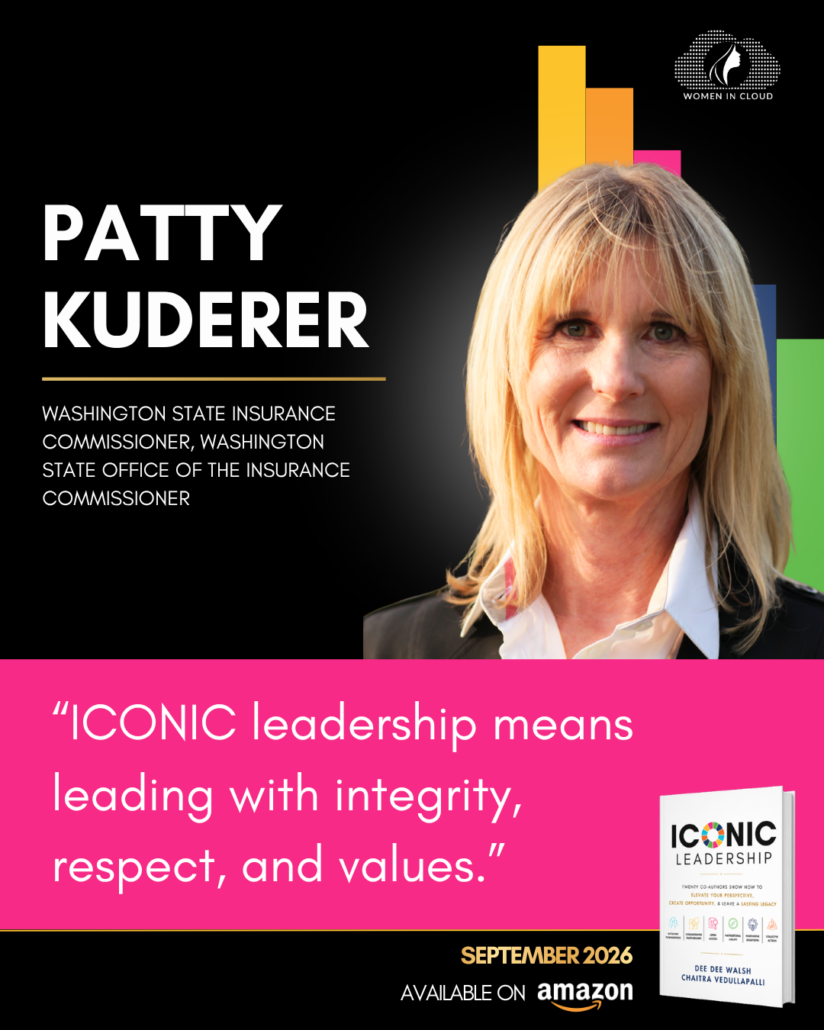
Patty Kuderer: Leadership People Can Trust
Leadership is tested when the people with the least power are depending on someone with authority to notice, listen, and act.
For Patty Kuderer, that responsibility has shaped a lifetime of leadership.
Long before she entered public office, she learned that a person’s life is about more than individual success. Growing up as one of nine children in a close family and small rural community, she was taught to give back, help when she could, and understand that time is one of the most valuable things a person can offer another.
Those early lessons became a foundation for how Patty approaches power.
Her career as an attorney placed her inside systems where rules, access, preparation, and representation could determine whether someone was protected or overlooked. She saw how difficult it could be for people to challenge institutions, especially when they lacked knowledge, resources, or confidence. She also learned that knowing how a system works can be powerful, but using that knowledge to help others is even more powerful.
That distinction matters.
Patty’s leadership is not rooted in authority for its own sake. It is rooted in responsibility. Whether working as a prosecutor, trial lawyer, legislator, or public official, her instinct has been to ask who is being helped, who may be harmed, and whether the proposed solution will address the real problem.
She describes herself as a problem solver, but not one interested in surface-level answers. Her approach looks upstream. It considers causes, consequences, implementation, and the people who will experience a decision after it leaves the meeting room.
For Patty, a policy that does not work in practice is only words on paper.
That practical commitment to outcomes is paired with a deeply relational leadership style. She distinguishes between a “you work for me” approach and a “you work with me” approach. Her preference is clear. Leadership works best when people can raise concerns, challenge assumptions, and solve problems together without fear of blame.
This is where her story connects naturally to Collaborative Partnerships and Inclusive Foundations within ICONIC Leadership.
Patty understands that better decisions emerge when leaders invite different perspectives into the room. Her experience has shown her that diversity is not simply about representation. It strengthens how information is processed, how risks are identified, and how solutions are developed.
Trust is the thread connecting it all.
In Patty’s view, trust begins with listening and is sustained when a leader’s actions remain consistent with their words. It requires the courage to take bold action when necessary, the judgment to know when a smaller step may move progress forward, and the humility to revise a decision when the evidence shows that something is not working as intended.
Her chapter invites readers to look beyond leadership as visibility or position. It asks what becomes possible when integrity is translated into governance, when respect becomes a daily operating principle, and when values remain present in the hardest decisions.
Because leadership people can trust is not built through promises alone.
It is built when those promises become protection, access, accountability, and action.
Learn More & Get Involved
✍️ ICONIC Leadership Assessment – https://womenincloud.com/iconicleadershipassessment/
▶️ ICONIC Leadership Podcast – https://open.spotify.com/show/6EizaFqN8adxa6WcWPJV0e?si=b442899535694682
📖 ICONIC Leadership Book – https://shop.ingramspark.com/b/084?params=owAAc4hbwh8riSosnpCgvnssQZ0ryWU9ZritStkw3F3