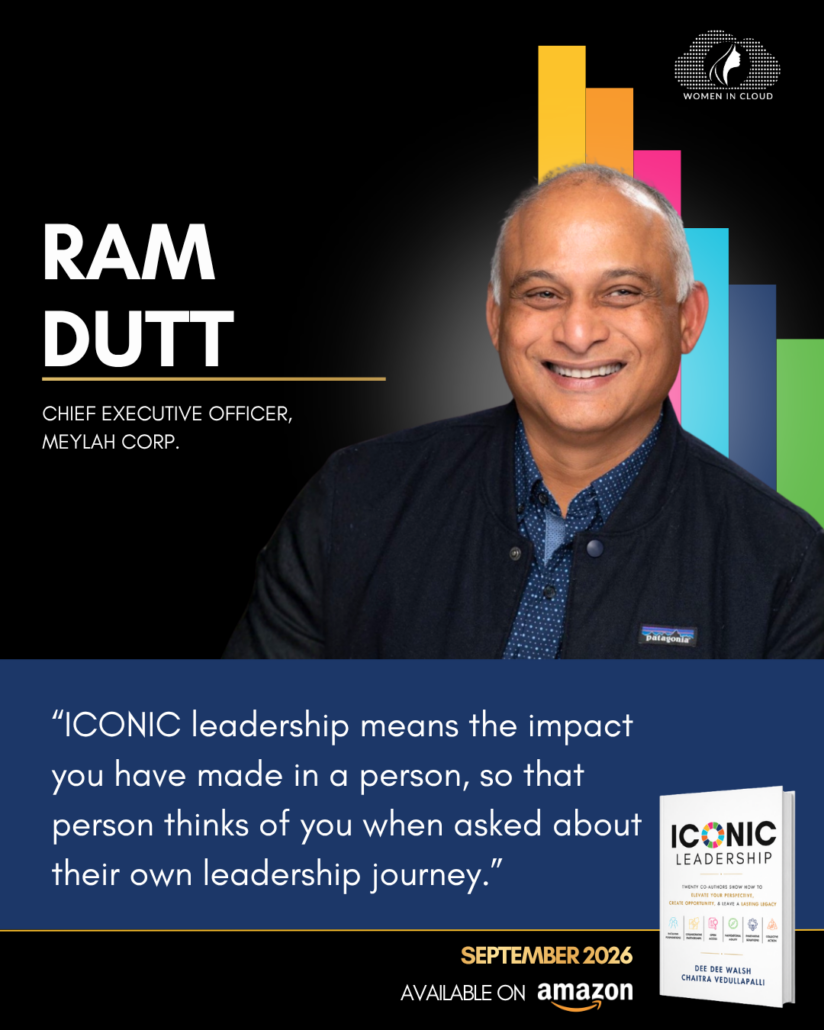
Ram Dutt: Innovation That Improves the Human Condition
Innovation is often measured by what is new.
Ram Dutt measures it by what becomes better.
Across manufacturing, digital transformation, community platforms, education, and artificial intelligence, Ram’s leadership journey has been shaped by a consistent instinct: understand the system, find the friction, and build a more effective way forward.
That instinct appeared early in his career.
As a quality engineer in flexible circuit manufacturing, Ram was asked to move beyond visual inspection and develop new electronic testing methods. The challenge was not simply to install a standard process. Flexible circuits required a different approach, and existing methods did not translate easily.
Ram spent months studying the problem, designing equipment, and creating a testing methodology that could identify functional issues before products reached customers. He also examined the broader manufacturing workflow, looking for defects, communication breakdowns, and gaps between departments.
The lesson was larger than quality control.
A solution becomes meaningful when it is connected to the full system around it.
That systems perspective continued as Ram helped support ISO certification, contributed to a cross-functional business unit, and learned how process, communication, and accountability must work together. One principle stayed with him: say what you do and do what you say.
Over time, his work moved from engineering and technical sales into entrepreneurship and digital platforms. Ram saw that small businesses were being asked to manage disconnected tools for content, commerce, social media, visibility, and customer engagement. Instead of treating each challenge separately, he helped build an integrated platform that brought those functions together.
When the market changed, he adapted again.
Ram recognized that even a strong product could struggle without trusted distribution and community reach. His business evolved from serving individual companies toward building community-based ecosystems where organizations could share visibility, infrastructure, and trust.
This is where Ram’s story connects most directly to the ICONIC Leadership pillar of Innovative Solutions.
His leadership is not innovation for novelty’s sake. It is innovation rooted in practical need. He looks for overlooked connections, questions familiar models, and develops approaches that make systems more useful for the people inside them.
Ram describes one of his greatest organizational contributions as thinking outside the box, identifying opportunities, and creating business models that defy normalcy.
That mindset is especially visible in his approach to artificial intelligence.
Ram sees AI as a powerful tool, but not as an automatic solution. In his school district, he helped explore a focused AI system that could review policies, procedures, and relevant laws, then provide administrators with responses and source references. The goal was not to remove human decision-making. It was to reduce time spent searching through large volumes of material so leaders could focus their attention where judgment mattered most.
That distinction is central to his philosophy.
AI can support research, automate routine work, improve efficiency, and help people connect information more quickly. But Ram believes communication, validation, context, and responsibility must remain under human oversight. Systems need guardrails, especially when automated workflows may affect people, institutions, or public trust.
His approach reflects a form of innovation that is both ambitious and disciplined.
It asks not only, “What can this technology do?” but also, “What problem are we solving, who benefits, and what must remain human?”
That is why Ram’s response to the question of what change he would most like to see in the world is so revealing:
Innovation that improves the human condition.
His chapter invites readers to consider innovation as a leadership responsibility. It requires curiosity, experimentation, and the courage to move beyond accepted models. But it also requires patience, structure, and the judgment to know when a new tool is truly creating value.
Because the most important innovations do more than optimize a process.
They help people work better, decide more wisely, and imagine possibilities that the old system could not support.
Learn More & Get Involved
✍️ ICONIC Leadership Assessment – https://womenincloud.com/iconicleadershipassessment/
▶️ ICONIC Leadership Podcast – https://open.spotify.com/show/6EizaFqN8adxa6WcWPJV0e?si=b442899535694682
📖 ICONIC Leadership Book – https://shop.ingramspark.com/b/084?params=owAAc4hbwh8riSosnpCgvnssQZ0ryWU9ZritStkw3F3