
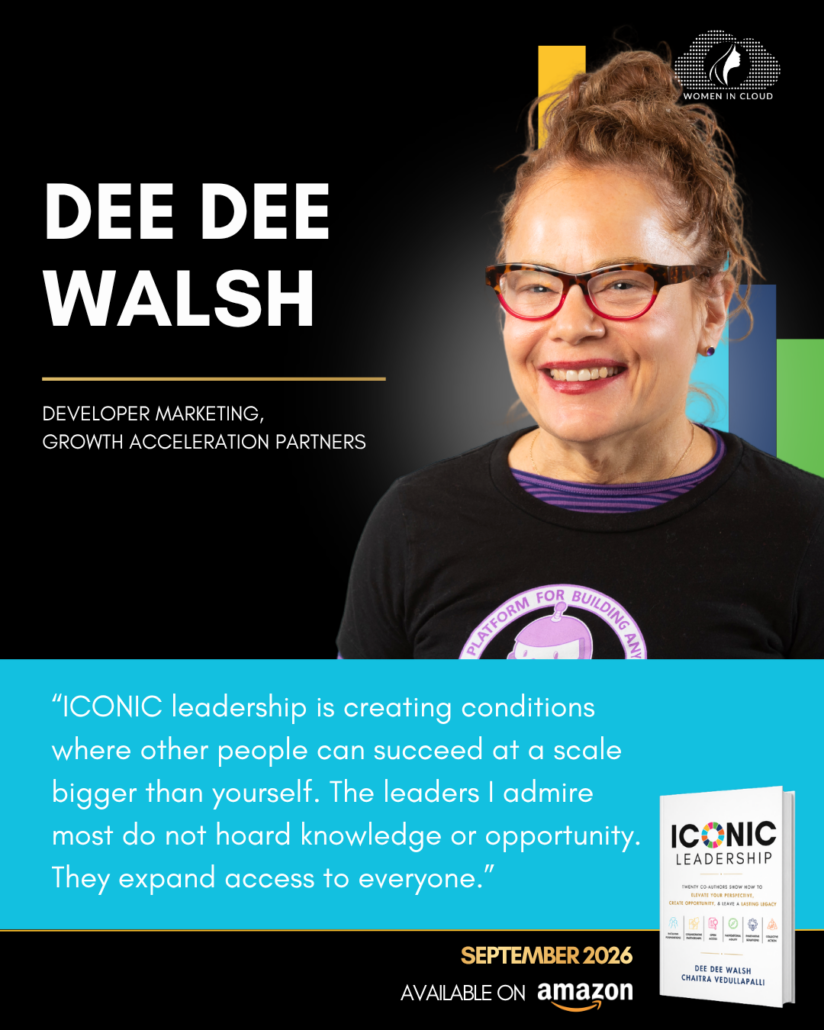
Dee Dee Walsh: Expanding Access in an Age of Intelligent Machines

Every major technology shift creates a choice.

It can concentrate knowledge, influence, and opportunity in the hands of those who already have access. Or it can lower barriers, invite new people into the conversation, and expand what more of society is able to create.

For Dee Dee Walsh, that choice has shaped a career spent at the intersection of technology, people, and possibility.

Her perspective was formed long before artificial intelligence became a defining business conversation. Growing up near Seattle, Dee Dee was surrounded by adults who volunteered their time to help young people explore science and technology. That early service ethic left a lasting impression: knowledge was not something to protect for personal advantage. It was something to share.

That belief continued through her work in software and her 21 years at Microsoft, where Visual Basic revealed what can happen when technology becomes more accessible. Software development had once felt gated by specialized education, technical systems, and permission from established experts. Visual Basic lowered those barriers, allowing business analysts, hobbyists, and people without traditional computer science backgrounds to build applications that solved real problems.

It did more than create developers. It created opportunity.

Today, Dee Dee sees artificial intelligence as another democratization moment. AI is reducing the distance between an idea and its execution. People no longer need the deepest technical expertise to begin creating, testing, or contributing. But access alone is not enough.

As technology becomes faster, leadership must become more discerning.

Dee Dee believes the leadership challenge has shifted from managing information to managing judgment. AI can synthesize research, generate content, write code, and accelerate analysis. What it cannot replace is human responsibility. The closer a decision comes to trust, values, people, or consequences, the more essential human accountability becomes.

Her approach connects deeply to the ICONIC Leadership pillars of Open Access and Inclusive Foundations. Open Access asks leaders to remove barriers to information, tools, networks, technology, and opportunity. Inclusive Foundations reminds us that the people shaping technology must reflect the society affected by it. As Dee Dee observes, when the people building technology do not reflect society, the outcomes will not reflect society either.

This is why her leadership is not centered on controlling every answer. It is centered on creating the conditions in which more people can participate, contribute, and succeed.

Her chapter introduces the idea of the leader as a growth anchor: someone who creates stability while expanding opportunity, and who helps an organization scale without losing its humanity. In moments of transformation, that role matters because technological change rarely affects systems alone. It affects identity, confidence, relationships, and people’s sense of where they belong.

Dee Dee’s story invites readers to reconsider what progress should look like.

It is not enough for technology to become more powerful. It must also become more participatory. It is not enough for organizations to move faster. They must preserve judgment, accountability, and humanity as they move. And it is not enough for leaders to gain access themselves. They must build the infrastructure through which others can enter.

Because the enduring measure of leadership is not how much knowledge a leader holds.

It is how widely opportunity expands because they chose to share it.

Learn More & Get Involved
✍️ ICONIC Leadership Assessment – https://womenincloud.com/iconicleadershipassessment/
▶️ ICONIC Leadership Podcast – https://open.spotify.com/show/6EizaFqN8adxa6WcWPJV0e?si=b442899535694682
📖 ICONIC Leadership Book – https://shop.ingramspark.com/b/084?params=owAAc4hbwh8riSosnpCgvnssQZ0ryWU9ZritStkw3F3
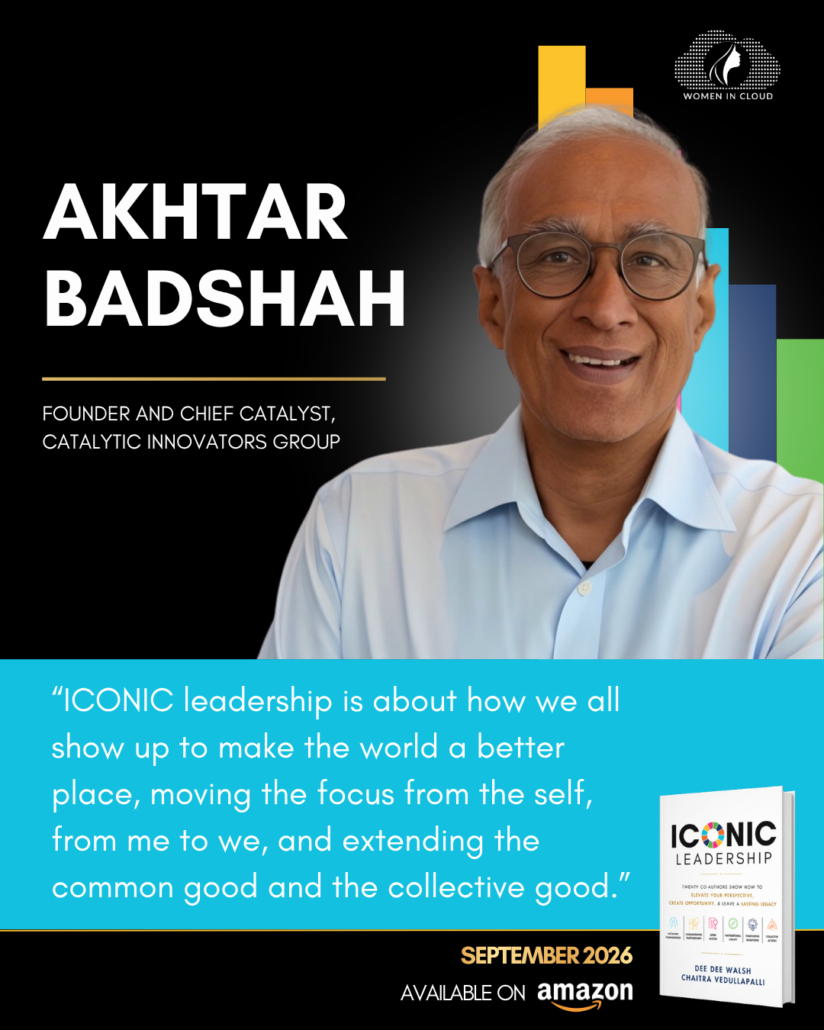
Akhtar Badshah: Leadership Begins with How You Show Up

What if leadership has less to do with being in charge and more to do with how you enter a room, respond to another person, or use the access already within your reach?

For Akhtar Badshah, leadership is not a title to claim. It is a way of showing up.

That distinction has shaped a journey spanning architecture, academia, global development, technology, philanthropy, teaching, and community impact. Across these different environments, Akhtar has moved between people in positions of extraordinary influence and communities too often excluded from opportunity. Yet his attention has consistently returned to the same question: how can we show up in a way that extends the common good?

His answer begins with humility.

Early in his career, representing institutions such as MIT and the Aga Khan Program opened doors around the world. Akhtar understood, however, that institutional access did not make him the expert in every room. Instead of arriving with answers, he arrived ready to listen. He asked communities, practitioners, and local leaders to share what they knew. That approach transformed access from a symbol of status into a bridge for participation.

The same principle later influenced his work in global philanthropy. Rather than assuming that a funder knew what communities needed, Akhtar advocated for listening first. Decisions became more inclusive when local voices helped shape them. Even when funding was not possible, the relationship did not have to end with rejection. A “no” could still include guidance, connection, technology, volunteers, or another pathway forward.

This is where Akhtar’s story connects deeply with Open Access and Collective Action within the ICONIC Leadership ARC.

For him, access is not complete when a door is technically open. It becomes meaningful when people are invited to enter, touch, experiment, contribute, and discover what may be possible for them. Whether he was sharing a camera with a child or placing new technology into the hands of young people who had never encountered it before, the principle remained the same: people need more than distant visibility. They need the opportunity to experience possibility for themselves.

Akhtar also challenges the assumption that meaningful impact must begin on a global stage. Showing up can begin inside a family, a workplace, a faith community, or a neighborhood. The scale may differ, but the responsibility is the same. Each person can make choices that move attention beyond the self and toward a wider collective good.

His chapter invites readers to reconsider the difference between doing more and being more effective. It asks what may change when we stop measuring leadership only through efficiency, hierarchy, and individual accomplishment, and instead examine the quality of our presence, our decisions, and our contribution.

The deeper practices behind that shift are reserved for the full chapter. But Akhtar leaves us with a question that can begin working immediately:

How are you showing up?

Not someday, when the title arrives or the platform becomes larger. Today, in the space you already occupy, with the people already around you.

Because leadership becomes lasting when “me” begins to make room for “we.”

Learn More & Get Involved
✍️ ICONIC Leadership Assessment – https://womenincloud.com/iconicleadershipassessment/
▶️ ICONIC Leadership Podcast – https://open.spotify.com/show/6EizaFqN8adxa6WcWPJV0e?si=b442899535694682
📖 ICONIC Leadership Book – https://shop.ingramspark.com/b/084?params=owAAc4hbwh8riSosnpCgvnssQZ0ryWU9ZritStkw3F3
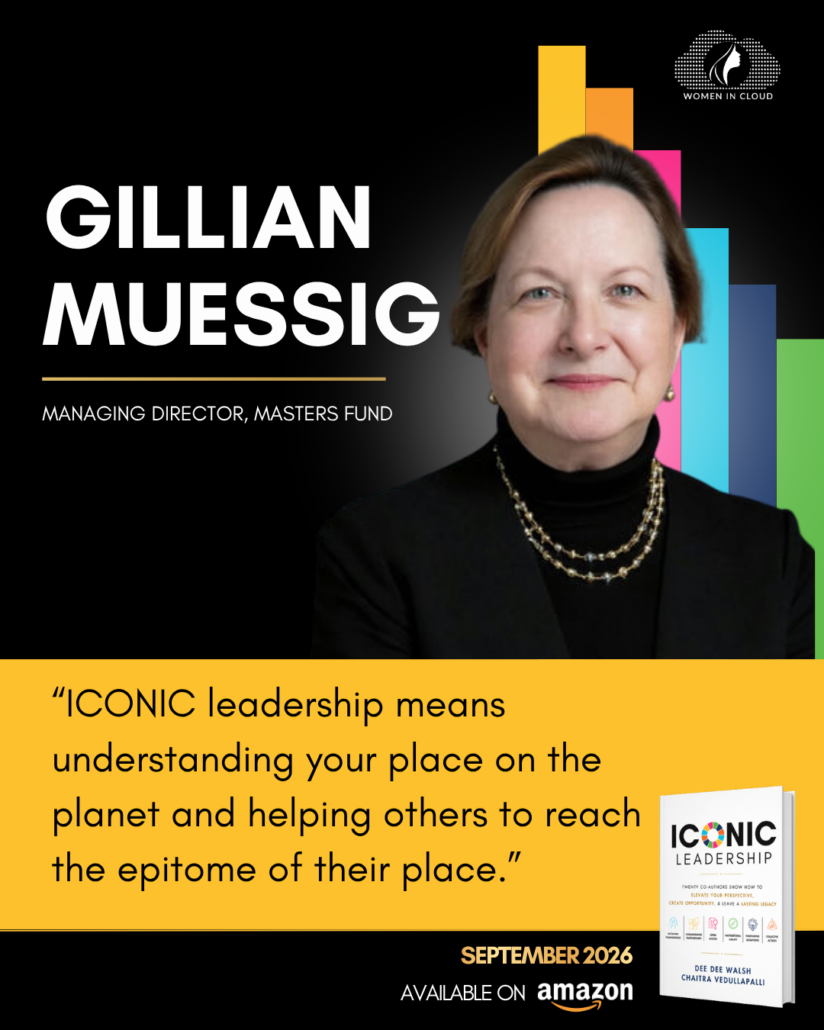
Gillian Muessig: Building Access Where Capital Has Not Yet Learned to Look

Capital often claims to follow the best ideas. But Gillian Muessig’s leadership story asks a sharper question: what happens when the system cannot recognize where the best ideas are coming from?

Across design, marketing, technology, entrepreneurship, venture capital, and philanthropy, Gillian has built her career at the intersection of innovation and access. From helping build SEOMoz into a leading digital marketing software company to her work today as Managing Director of Mastersfund™, she has consistently focused on what becomes possible when overlooked talent is given the tools, capital, and confidence to move forward.

Her perspective is shaped by both lived experience and hard-won pattern recognition. Gillian understands what it means to build through uncertainty. During the dot-com downturn, she faced debt, disruption, and the painful realization that the business model she had built could no longer carry the company forward. Yet she kept moving, pivoted with intention, and learned that success is often less about having a perfect path than having the fortitude to keep going when the path breaks open.

That same clarity informs her work in venture capital. Gillian sees the capital gap not simply as a fairness issue, but as a missed opportunity. Her chapter explores the structural assumptions that shape who gets funded, who gets believed, and whose leadership is recognized as investable. Her answer is not to ask women to disappear into existing systems. It is to build better systems, with different hands moving capital into different hands.

This is where Gillian’s story connects deeply to ICONIC Leadership. Her work reflects Open Access and Inclusive Foundations: the belief that opportunity must be intentionally designed, not passively hoped for, and that different perspectives are not a concession but a source of stronger outcomes.

For Gillian, leadership is also deeply practical. It is not only vision or influence. It is equipping people to perform at the highest level, then trusting them enough to let them lead. In her words, leadership requires giving people the tools they need to play at the top of their game and then getting out of their way.

In her chapter, readers will encounter a leader who understands capital, culture, resilience, and responsibility as interconnected forces. Her story does not give away a simple formula for success. Instead, it invites a more powerful reflection: what would change if access was built into the system from the beginning?

Because for Gillian Muessig, iconic leadership is not about occupying space at the top. It is about understanding your place in the world, helping others rise into theirs, and building the structures that allow more people to launch, grow, pivot, and thrive.

Learn More & Get Involved
✍️ ICONIC Leadership Assessment – https://womenincloud.com/iconicleadershipassessment/
▶️ ICONIC Leadership Podcast – https://open.spotify.com/show/6EizaFqN8adxa6WcWPJV0e?si=b442899535694682
📖 ICONIC Leadership Book – https://shop.ingramspark.com/b/084?params=owAAc4hbwh8riSosnpCgvnssQZ0ryWU9ZritStkw3F3
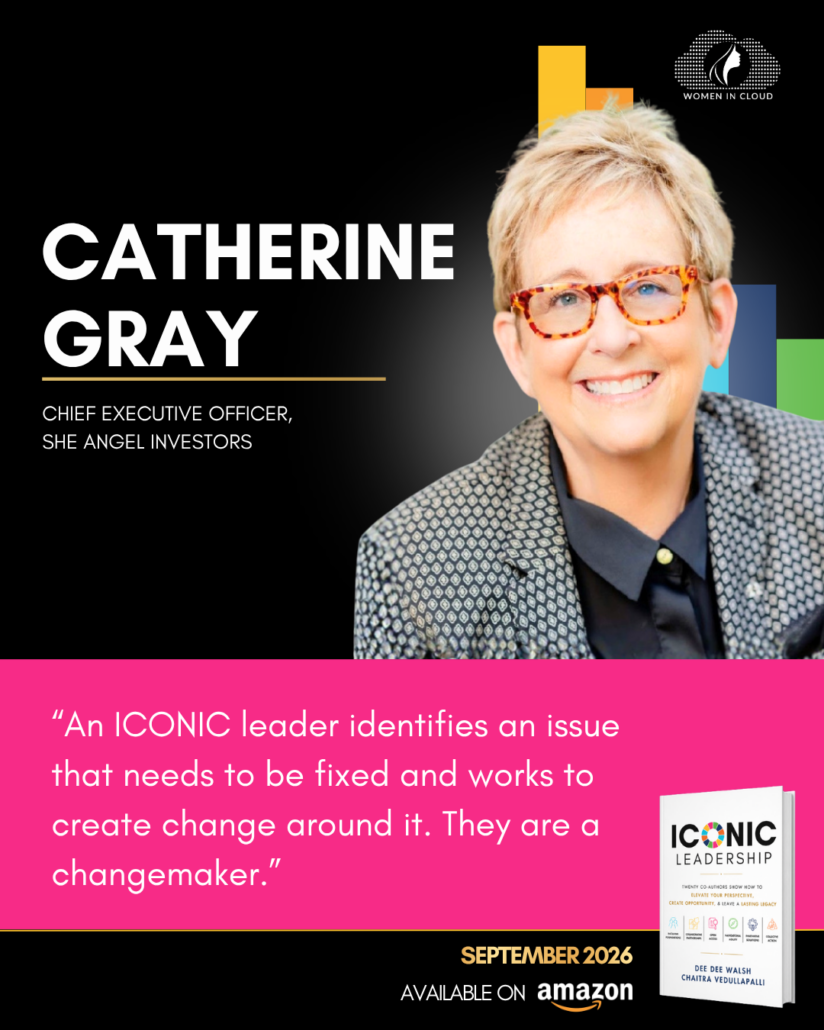
Catherine Gray: Changing Who Gets to Fund the Future

Some systems remain unequal because too few people can see how they work.

The barriers are embedded in relationships, networks, assumptions, and decisions made behind closed doors. For those standing outside the system, the outcome can feel personal. But the problem is often structural.

Catherine Gray has built her leadership around making those structures visible and using storytelling to create change.

Growing up in Virginia during school desegregation, Catherine witnessed inequality at a formative time in her life. She also grew up during a period when women were only beginning to gain rights and freedoms that younger generations might now take for granted. As an LGBTQ woman who could not initially live openly in every part of her life, she developed a deep conviction that rights, visibility, and opportunity should not depend on identity.

That conviction became action through media.

After coming out to her family, Catherine helped launch a gay cable network and produced I Can’t Marry You, a documentary about the rights and protections denied to same-sex couples. When people told her marriage equality would never happen, she continued. She raised the funding, secured Betty DeGeneres as narrator, found sponsors, and brought the film to public television.

The experience reinforced something Catherine had already begun to understand: film and television can help people see lives, challenges, and possibilities that were previously hidden from them.

Years later, she turned that same lens toward another inequitable system.

Catherine saw that women entrepreneurs were building companies, solving problems, and creating innovations, yet were receiving only a small fraction of available venture capital. She also recognized that many women had never been introduced to angel investing or venture capital as a path for building wealth and influencing which ideas reach the marketplace.

Her response was to build platforms that could change both sides of the equation.

Through She Angel Investors, Catherine connects women with resources to grow their businesses, build wealth, understand investment, and develop the relationships that make funding possible. Through her Invest in Her podcast, she has created space for accomplished entrepreneurs and investors to share their experiences and resources with others.

Her film Show Her the Money carries that mission to a wider audience.

Catherine raised more than one million dollars for the film by bringing together over 30 women and several men who believed in its purpose. The project went on a 100-city tour, reached audiences through hundreds of screenings, and became part of a broader effort to educate people about the funding gap and the role women can play as investors, founders, and decision-makers.

This work reflects the ICONIC Leadership pillar of Open Access.

Catherine is not only asking why women receive less funding. She is helping more women understand how capital moves, where investor relationships are formed, and how they can enter the system themselves. Her belief is that women must be present not only as entrepreneurs asking for capital, but also at the tables deciding where that capital goes.

For Catherine, fundraising begins with relationships. Entrepreneurs must show up, know their businesses, communicate their passion, and build trust with people who believe in their vision. But she also knows that the system itself must become more representative. Investors often support people and ideas they recognize, which is why diverse decision-makers are essential to a more equitable funding landscape.

Her chapter offers a view of leadership that combines purpose with visibility and conviction with action.

Catherine does not wait for an inequity to correct itself. She gathers people, creates a platform, finds the resources, and moves the issue into public view.

Because a changemaker does more than recognize what is broken.

A changemaker helps others see it, then gives them a way to participate in building what comes next.

Learn More & Get Involved
✍️ ICONIC Leadership Assessment – https://womenincloud.com/iconicleadershipassessment/
▶️ ICONIC Leadership Podcast – https://open.spotify.com/show/6EizaFqN8adxa6WcWPJV0e?si=b442899535694682
📖 ICONIC Leadership Book – https://shop.ingramspark.com/b/084?params=owAAc4hbwh8riSosnpCgvnssQZ0ryWU9ZritStkw3F3

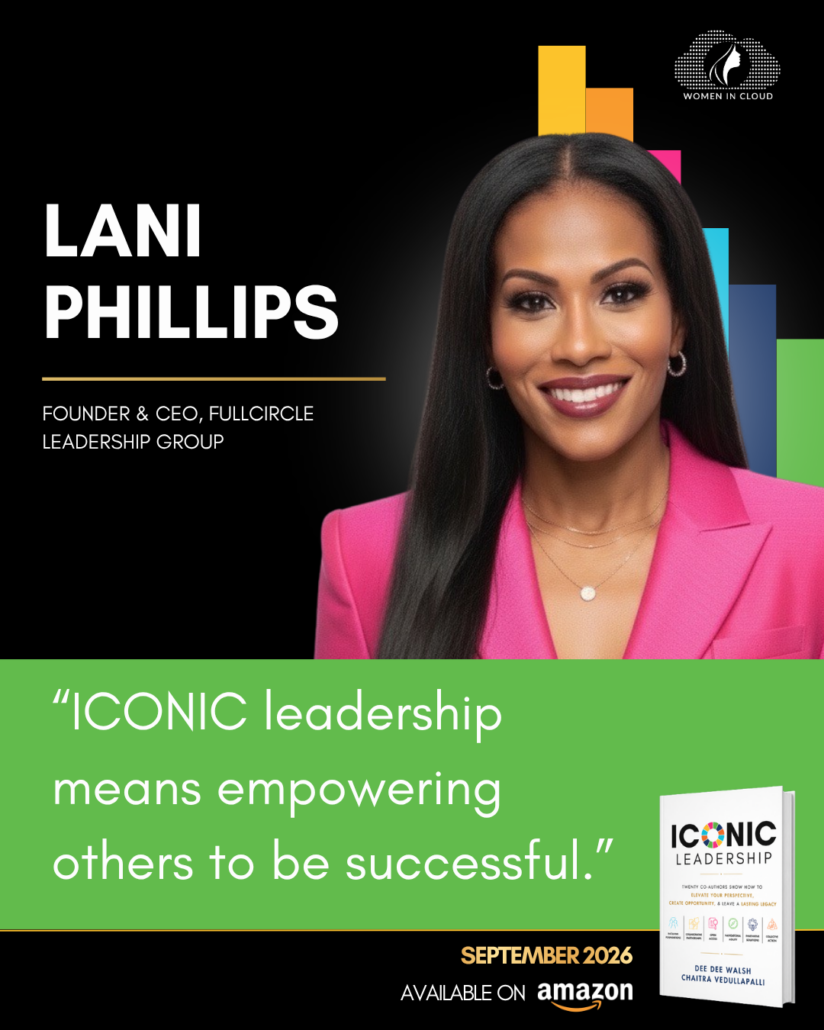
Sherlaender “Lani” Phillips: Empowering Others to Succeed

The strongest leaders do not make themselves indispensable.

They build people who no longer need them to have every answer.

For Sherlaender “Lani” Phillips, that understanding was learned through experience. Early in her leadership journey, she believed success came from working harder, delivering consistently, and becoming the person everyone could depend on. That approach had helped her establish credibility as an individual contributor.

But leadership required something different.

When Lani first began managing others, she tried to give people the same blueprint that had worked for her. She shared her formula and expected others to follow it. The problem was that people brought different strengths, motivations, experiences, and needs to the work.

Leadership could not remain centered on what she knew.

It had to become centered on what she could unlock in others.

That shift reflects lessons planted much earlier in Lani’s life. Her father helped her develop confidence, discipline, and the courage to use her voice. Her mother gave her curiosity and modeled the ability to make people feel seen and heard. Before her mother passed away, she also gave Lani a lasting charge: value education, learn to stand on your own, invest in meaningful relationships, and take care of the people entrusted to you.

Those lessons became part of how Lani leads.

She believes performance matters, but she refuses to separate performance from humanity. One of her clearest non-negotiables is preserving the dignity of people. She does not believe leaders must choose between caring for individuals and delivering results. The responsibility is to do both.

That commitment shaped her progression through technology, sales, and executive leadership. Across her career, she learned to meet people where they were, understand what they were trying to accomplish, and create the conditions that could help them grow.

Sometimes that required encouragement.

Sometimes it required access to rooms, conversations, and opportunities that had previously been unavailable.

Sometimes it required honest feedback, accountability, or removing barriers that were preventing someone from succeeding.

This is where Lani’s story connects naturally to Inclusive Foundations and Collaborative Partnerships within ICONIC Leadership.

Inclusive leadership begins by recognizing that people cannot be reduced to assumptions, titles, or performance data. Lani learned not to enter a relationship believing men would lead one way and women another. She approaches people with curiosity, listens for what is beneath the behavior, and works to understand the environment shaping their choices.

Her perspective on data reflects the same principle. Spreadsheets can reveal patterns, gaps, and outcomes, but they cannot explain the complete human reality behind them. Lani believes leaders must speak with the people doing the work, experience what is happening on the ground, and use discernment before making decisions.

That human advantage becomes even more important as artificial intelligence expands.

Lani sees AI as a powerful tool for generating options, identifying patterns, and extending human capability. But she does not believe it should replace thinking, judgment, dialogue, or trust. Leaders must remain curious enough to challenge its output and grounded enough to preserve the human connection technology cannot reproduce.

Her chapter invites leaders to reconsider what their teams truly need from them.

Do people depend on you for every answer, or have you developed their confidence to decide? Do your systems protect dignity while driving accountability? Are you using your influence to control outcomes, or to create shared ownership?

For Lani, leadership becomes iconic when success is no longer concentrated in one person.

It becomes iconic when others rise, lead, and succeed because someone first believed they could.

Learn More & Get Involved
✍️ ICONIC Leadership Assessment – https://womenincloud.com/iconicleadershipassessment/
▶️ ICONIC Leadership Podcast – https://open.spotify.com/show/6EizaFqN8adxa6WcWPJV0e?si=b442899535694682
📖 ICONIC Leadership Book – https://shop.ingramspark.com/b/084?params=owAAc4hbwh8riSosnpCgvnssQZ0ryWU9ZritStkw3F3