
The Homework Gap No One Talks About: Why Carol Grant Built Opolo for Neurodiverse Students

By the time Carol Grant’s sons got home from school, they were already exhausted.


Not from learning itself, but from the invisible labor surrounding it. Remembering instructions, prioritizing assignments, and figuring out where to begin. One of her sons has ADHD. The other has Oral Written Language Disorder. Each afternoon, she watched capable, intelligent kids sit down in front of their laptops and stall at the same moment: the instant a screen full of assignments appeared with no guidance for what mattered most.


At school, her kids had support, then they came home, and suddenly they were expected to manage everything on their own. And the more she looked around, the more she realized this wasn’t unique to her family. More and more children, especially those who need extra support, are quietly falling through the same gaps between school and home.


Classrooms provided structure, teachers offered guidance, and the environment itself helped keep attention on track. But once the school day ended, those systems disappeared, leaving students expected to manage the cognitive weight of their schoolwork independently, even when a parent is right there, often without either of them knowing where to start.


Grant spent more than a year searching for a tool that could help bridge that gap. She found plenty of edtech platforms built for administrators, grading systems, compliance, and general-purpose organization tools. Very little is designed around how neurodiverse students actually move through homework.
So she started building Opolo.


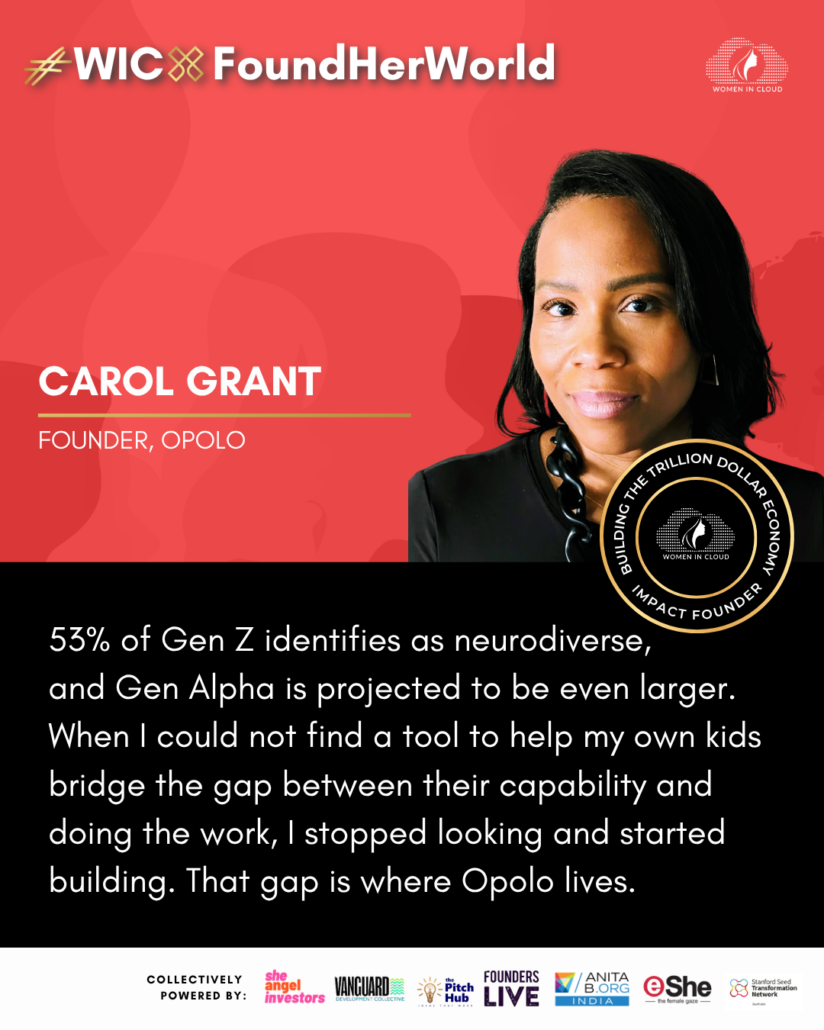
“53% of Gen Z identifies as neurodiverse, and Gen Alpha is projected to be even larger. When I could not find a tool to help my own kids bridge the gap between their capability and doing the work independently, I stopped looking and started building. That gap is where Opolo lives.”


Opolo acts as an AI-powered executive functioning layer over the learning management systems schools already use. It identifies which assignments matter most, breaks larger tasks into manageable steps, and helps students build momentum instead of spiraling into overwhelm. Parents remain informed without becoming nightly enforcers. The support structure stays with the student after the school bell rings.
Before founding Opolo, Grant spent fifteen years leading product validation and go-to-market initiatives at Microsoft, Zillow, and growth-stage companies. But the most detailed research came from her own kitchen table.


Families are closely following Opolo’s development and the interest is growing.
Grant is building carefully because she knows the students waiting for this product are not looking for another app.
They are looking for a way to begin.

Learn More & Get Involved
🎬 Watch the ICONS Movie — Meet the women behind the movement. Icons by Women in Cloud
📣 Read the Campaign Launch — See how #FoundHerWorld is converting conversations into capital. Women in Cloud Launches #FoundHerWorld
✍️ Nominate a Founder — Know someone who belongs in this spotlight? Submit a Nomination
Charlotte Luu Spent Years Inside Corporate America Watching Start Ups Get the Wrong Kind of Help. Charlotte Corporate Counsel Is Her Correction.

The tech founder sitting across from a Big Law billing structure often felt two pressures: pay for a fully staffed legal team they didn’t need or risk inadequate protection for their ideas and intellectual property.


For lean, fast-growing technology startups, legal counsel has historically come packaged the wrong way. Large firms built their models around large clients, layered staffing, billable hour structures, and overhead designed for corporations with legal departments of their own. The new founders who needed efficient, timely guidance the most were either priced out entirely or paying for a system architected around only enterprise needs.


Charlotte Luu watched this misalignment from the inside. As an attorney with a meticulous eye for numbers and a lifelong entrepreneurial instinct, she understood both sides of the table: what start-ups actually need from their legal counsel and what the traditional firm model was and wasn’t built to deliver.


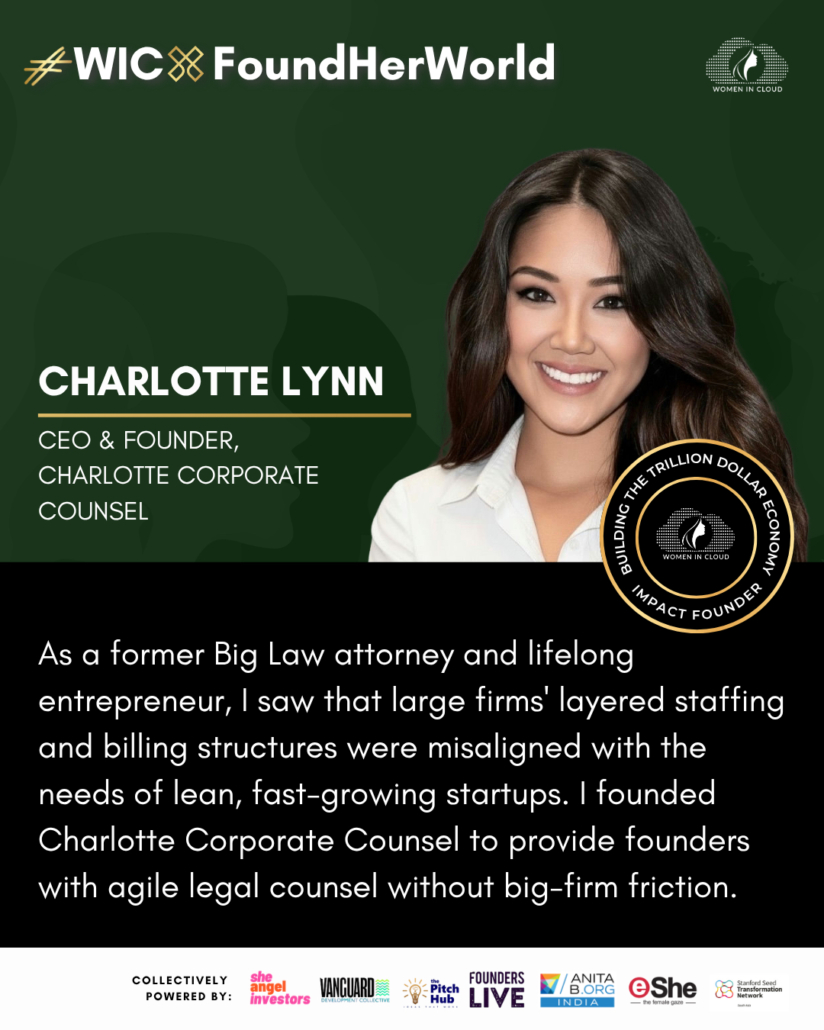
“For decades, sophisticated legal services for technology companies were concentrated within large institutions because access to specialized industry knowledge and resources created significant barriers to entry,” she says. “Today, people can build software with AI tools without a computer science degree. Knowledge is more accessible than ever, and expertise is no longer confined to large organizations. I founded Charlotte Corporate Counsel to give entrepreneurs business-minded legal support without the friction and overhead of a traditional Big Law model.”


Charlotte Corporate Counsel is the practice she built around that conviction, a fractional general counsel for startup and growth-stage technology companies that need sophisticated legal expertise without the structural overhead of a traditional engagement. The work spans the full arc of what a fast-growing founder actually encounters: innovation conversations, risk management, operational strategy, and the precise drafting that protects a company at every stage of its growth.


What sets the practice apart is not just the model, but the transparency it brings to legal expenses. By providing upfront estimates for legal matters, the firm gives founders greater visibility into costs and control over their budgets. That transparency is also the foundation of an attorney-client relationship built on trust, collaboration, and a shared understanding of business goals. Charlotte approaches each client with the belief that every founder she works with has something to teach her about their industry, their vision, and the particular risks and opportunities their business faces. That posture, she has found, builds the kind of trust and collaboration that makes legal counsel useful rather than merely defensive.


Serving entrepreneurs who dedicate their lives to building something new has become, she says, one of the most fulfilling parts of her career. For the founders who have always deserved better than big-firm pressures, Charlotte Luu built something that fits.

Learn More & Get Involved
🎬 Watch the ICONS Movie — Meet the women behind the movement. Icons by Women in Cloud
📣 Read the Campaign Launch — See how #FoundHerWorld is converting conversations into capital. Women in Cloud Launches #FoundHerWorld
✍️ Nominate a Founder — Know someone who belongs in this spotlight? Submit a Nomination