
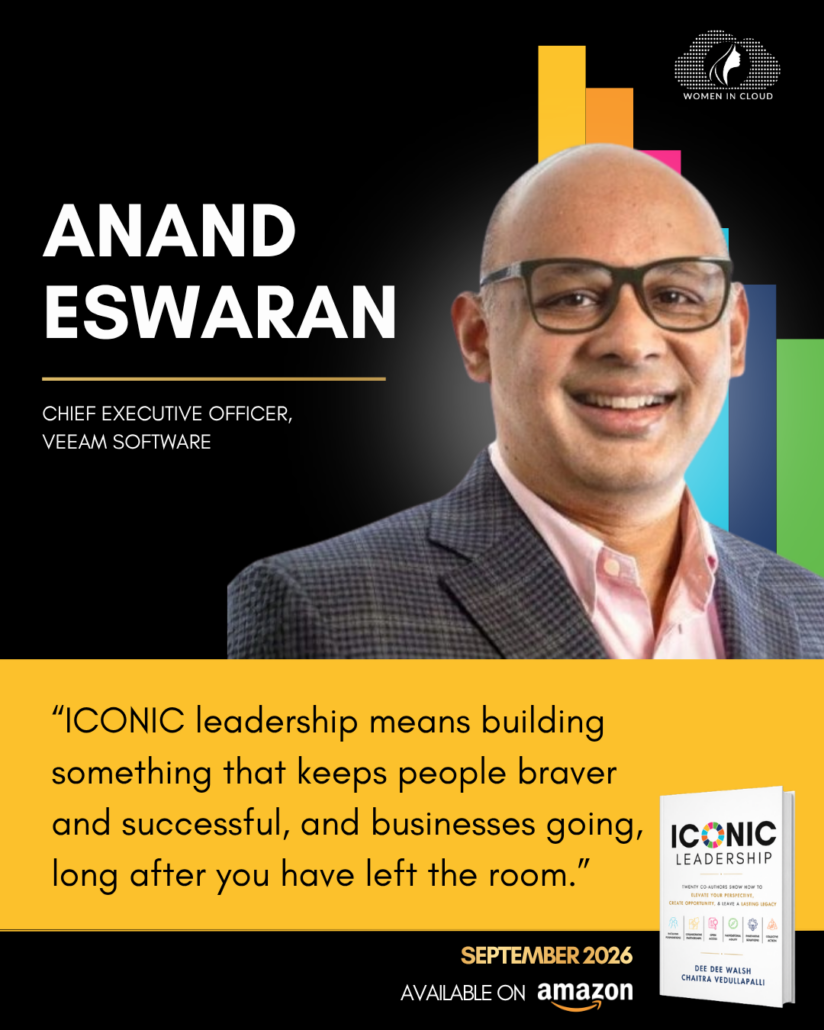
Anand: Building What Endures After You Leave
The clearest evidence of leadership may not appear while the leader is still in the room.
It may emerge later, in the decisions people make without waiting for permission, the courage they show when values are tested, and the systems that continue creating opportunity after the original leader has moved on.
For Anand, that is the deeper measure of success.
His leadership philosophy began with curiosity. Growing up in Mumbai, he dismantled radios because he wanted to understand how voices could come from a box. His parents could have shut down that experimentation. Instead, they tolerated the chaos and gave him what he now recognizes as permission to be curious without requiring an immediate outcome.
That environment taught him that discovery is rarely neat.
Sometimes understanding requires taking something apart. Sometimes experimentation leads to failure. What matters is the response that follows. An environment shaped by conversation rather than fear gives people room to learn, adjust, and try again.
Alongside curiosity, Anand inherited another defining principle from his father: courage and respect are not opposites.
He saw that it was possible to disagree firmly, stand by a conviction, and still treat people with dignity. That lesson later became central to how he approached authority, equality, and organizational culture.
Early in his career, Anand faced a client who objected to an accomplished woman holding a critical role on a project team. The demand was direct: remove her or lose the business.
Choosing to protect the relationship would have been easier. Choosing to protect the principle was right.
Anand refused to remove her.
The experience reinforced a belief that continues to shape his leadership today: people often know what is right, but organizations must create the conditions that give them the courage to act on it.
That is why he describes dissent as an obligation.
When someone holds a different perspective, they should be expected to raise it. Teams can debate intensely before a decision is made, but once the decision is clear, everyone commits to moving forward together. Anand describes this rhythm simply as debate, decide, and do.
This approach connects naturally to Inclusive Foundations and Collective Action within ICONIC Leadership.
Inclusive leadership is not achieved by inviting diverse people into a room and expecting them to remain silent. It requires a culture where perspectives can influence the decision, values are reinforced through action, and people trust that principled disagreement will not be punished.
Collective action also depends on moving beyond the idea that leadership belongs to one visible individual.
Anand sees power less as the authority to tell others what to do and more as the credibility to move people, teams, and businesses in a meaningful direction. He calls this soft power. It is built through consistent delivery, generosity, attitude, and a willingness to contribute beyond the limits of a formal role.
His chapter invites readers to examine what their leadership is leaving behind.
Are people more courageous because they worked with you? Have you created systems that help others succeed? Does the organization remain aligned to its values when you are absent? Have you developed people who can accomplish more than they once believed possible?
For Anand, legacy is not the preservation of a leader’s presence.
It is the creation of a foundation strong enough to make that presence unnecessary.
Because iconic leadership is not only about what happens while you are leading.
It is about what continues, grows, and becomes possible after you leave the room.
Learn More & Get Involved
✍️ ICONIC Leadership Assessment – https://womenincloud.com/iconicleadershipassessment/
▶️ ICONIC Leadership Podcast – https://open.spotify.com/show/6EizaFqN8adxa6WcWPJV0e?si=b442899535694682
📖 ICONIC Leadership Book – https://shop.ingramspark.com/b/084?params=owAAc4hbwh8riSosnpCgvnssQZ0ryWU9ZritStkw3F3